Why Most AI Songs Sound Generic — and 7 Details That Fix It
AI songs sound generic for one reason, and it is not the model. Here are the seven details that make a personalised song sound like it was written about a real person.
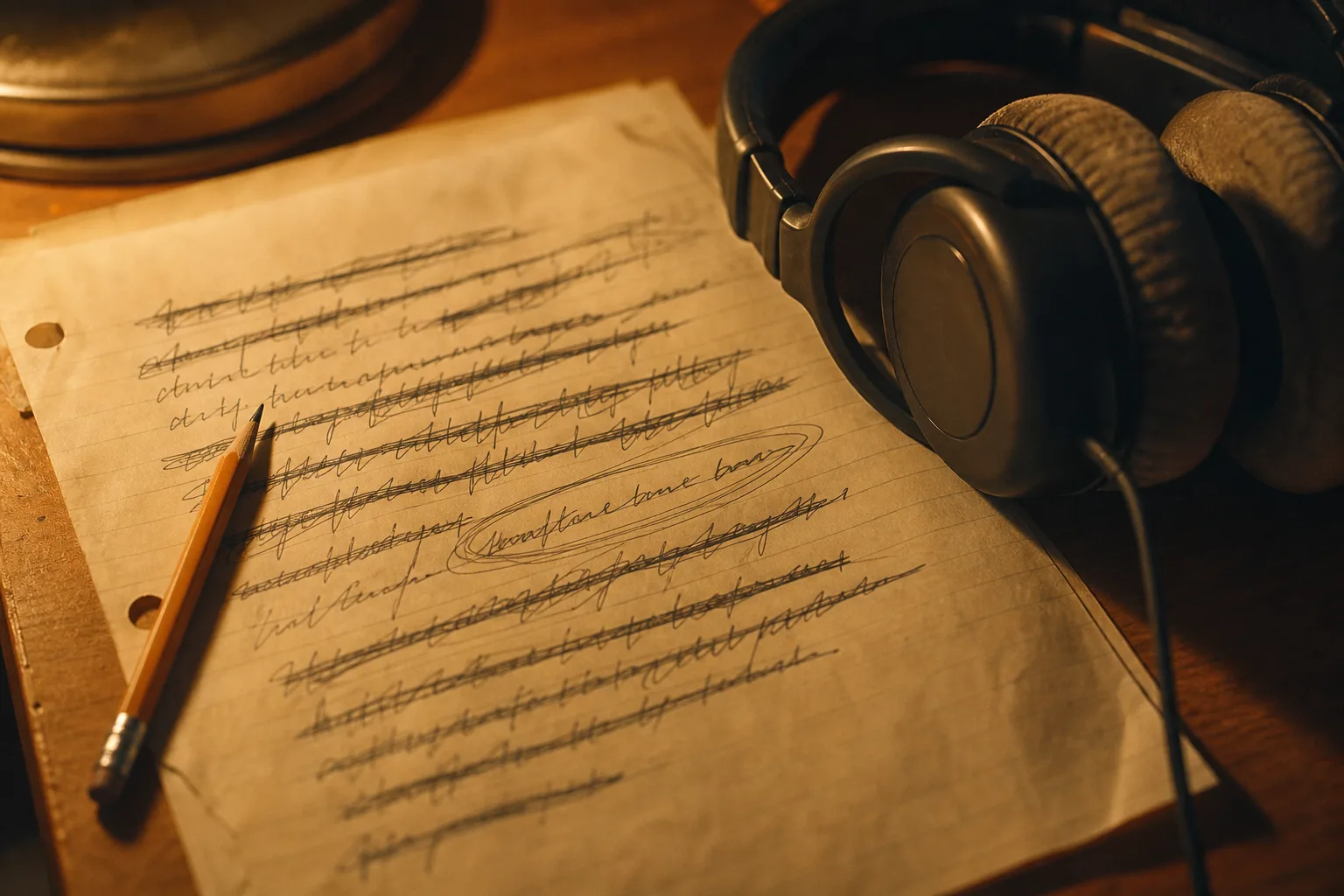
Listen to enough AI-generated songs and they blur together. Not because the vocals are bad — they are often very good — but because they are all about nobody in particular. The cause is boring and fixable, and it has nothing to do with which tool you use.
The actual reason
Generic in, generic out. That is the whole diagnosis.
Ask a hundred people to describe their mother and roughly ninety will produce the same six words: kind, strong, selfless, always there, loving, my best friend. Every one is true. Not one of them is about her. Feed those six words into any system and you will get a song about a generic mother, because that is what you described.
The model is not the bottleneck. The brief is.
The one-line test
Take any line of your song. Could it appear, unchanged, in a stranger's song about their mother? If yes, it is filler. A good personal song has no lines that pass that test.
The seven details that fix it
1. A proper noun
Not "her hometown" — the name of the town. Not "the family dog" — the dog's name. Proper nouns are the fastest way to make a song sound like it belongs to one specific household, and most briefs contain none.
2. An object
The blue mug. The Vauxhall with the broken window. The coat she has had for fifteen years. Objects carry more emotional weight per word than any adjective, because the listener can see them.
3. A number
A year, an age, a house number, how many miles, how many kids, how long. Numbers are unfakeable. "Thirty years" lands where "a long time" does not.
4. A phrase they say
Everybody has one, usually one they would deny. Getting their catchphrase into a chorus is the single most reliable way to make a room laugh and then go quiet.
5. Something slightly unflattering
She is always late. He cannot follow a recipe. She sings the wrong words to every song. A small, affectionate flaw is what separates a song about a real person from a eulogy. Pure praise reads as insincere.
6. One hard thing
The year that was difficult. The thing they got through. It does not need detail — one line is enough, and it gives every other line its weight. Songs with no shadow in them feel weightless.
7. Their name, more than once
People underuse this. Hearing your own name sung is the moment the song stops being a nice gesture and becomes yours. Put it in the first line and the last, at minimum.
Try it with seven real details. Write them in, read the lyrics that come back, and change anything that could be about someone else.
Write a song that sounds like themBefore and after
| Generic brief | Specific brief |
|---|---|
| My mum is kind and has always been there for me | Mum. Rosemary. Still lives on Elm Road. Calls the dog by our old cat's name |
| She works hard for the family | Thirty-one years of 5am shifts at the same hospital |
| She loves gardening | Talks to the tomatoes. Will not admit it |
| She has been through a lot | 2019. She never once said it was hard |
| I love her so much | She still texts me the weather forecast every morning |
Same person. Same tool. Completely different song.
Three habits that make it worse
Regenerating instead of rewriting
The instinct when a song disappoints is to hit generate again. If the brief has not changed, you are shuffling the same deck. Change one specific thing — add a proper noun, cut an adjective — then regenerate. Songwriting guides for these tools say the same thing: identify the single clearest problem and change only that.
Fixing the music before the words
People hear something flat and start changing the genre. Genre is almost never the problem. If the lyrics are vague, a country version of vague is still vague.
Writing what you think you should feel
Briefs written in card language produce card songs. Write what you would actually say to a friend about this person, including the funny bits. That voice is the one worth singing.
About "AI slop"
The complaint you see everywhere in music communities is not really about AI. One of the most-upvoted posts on the subject this year put it in five words: "AI music isn't the problem. AI slop is." The objection is to volume without care — hundreds of tracks pushed out by people who never listened to any of them.
A personalised gift song is structurally the opposite of that. It is one song, about one person, built from details nobody else knows, read and edited by someone who loves them. Whatever you think about AI in music generally, that is not slop. It is a letter that happens to have a melody.
A five-minute checklist before you generate
- Have I used their actual name?
- Is there a proper noun — a place, a person, a pet?
- Is there a physical object?
- Is there a number?
- Is there something they say?
- Is there one flaw, told fondly?
- Is there one hard thing?
- Have I deleted every line a stranger could have written?
Eight yeses and the tool almost cannot make it generic.
Common questions
Why do AI-generated songs sound generic?
Almost always because the brief was generic. A model can only work with what it is given, and most people describe a person in adjectives — kind, funny, supportive — which describe millions of people equally well. Replace the adjectives with concrete nouns from that person’s actual life and the same system produces something specific.
How do I make an AI song sound more personal?
Put at least two real nouns in every verse: a place, an object, a name, a phrase they say. Use their actual name repeatedly. Name a year or an age. Include one thing that is slightly unflattering or funny. Then read the lyrics and cut every line that could be about somebody else.
What is "AI slop" and how do I avoid it?
AI slop is high-volume, low-effort output published without editing. You avoid it by doing the one thing slop never does: reading the result and changing it. A song you edited line by line, built on details only you know, is the opposite of slop regardless of what tool made the audio.
Does the music style matter as much as the lyrics?
It matters for whether people enjoy listening, but not for whether it feels personal. Personal comes almost entirely from the words. Style choices worth making: pick a tempo that matches the mood, keep the intro short, and choose a vocal type that suits the person the song is about.
Should I regenerate a song many times to get a good one?
No — that is the most common mistake. Repeated regeneration with an unchanged brief gives you variations on the same generic input. Change one specific thing, then regenerate. Fix the lyrics before you touch the music, because the lyrics are what makes it feel like a real person.